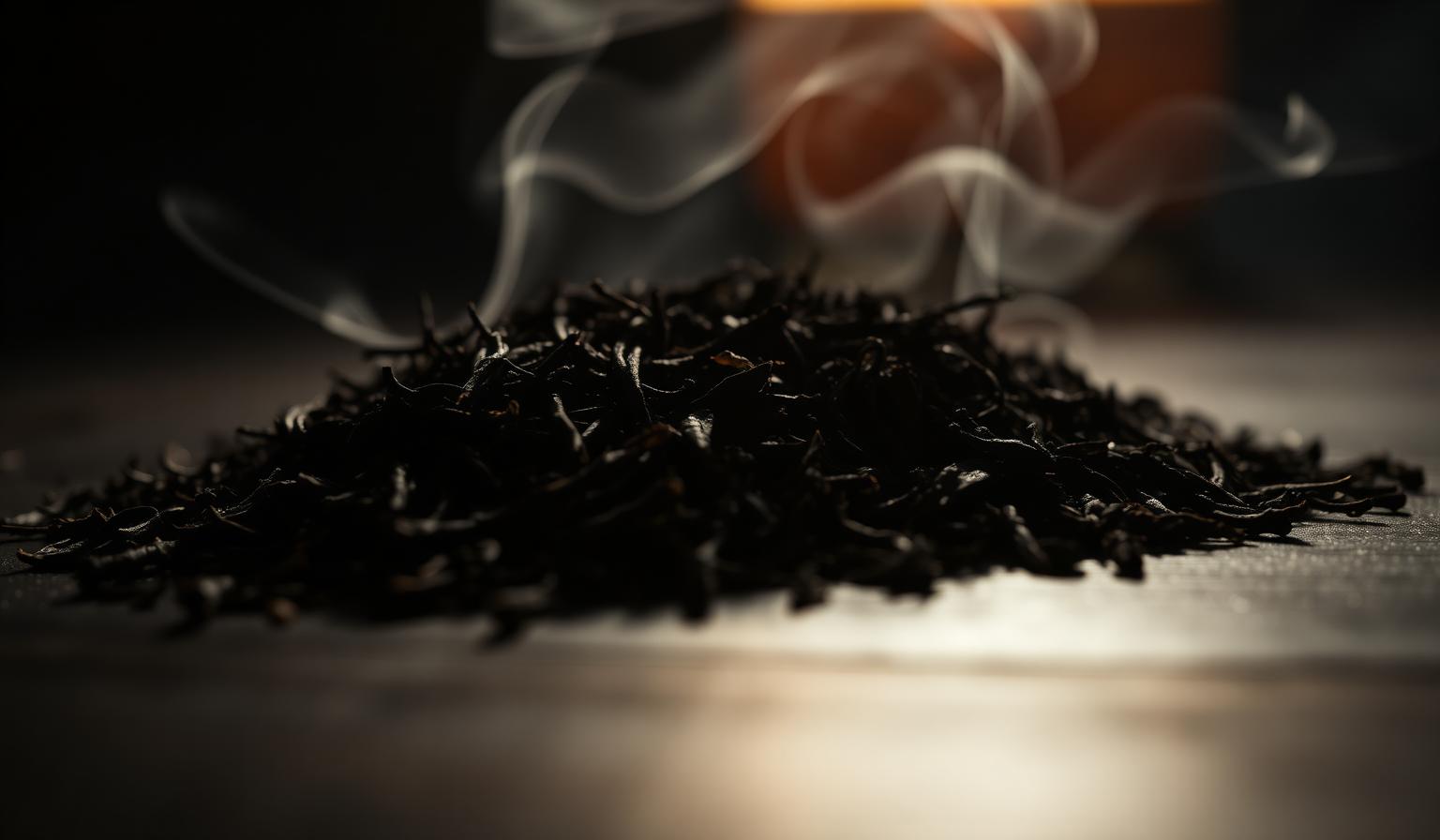
Lapsang Souchong is a fully oxidised black tea made from the Camellia sinensis plant, so yes — it contains caffeine. The smoke does not change that. What changes the caffeine in your cup is the leaf grade, how much you use, how hot the water is, and how long you steep.
How much caffeine, roughly
A typical 250 ml cup of Lapsang Souchong brewed at 1 teaspoon per cup for 3–5 minutes lands at roughly 40–60 mg of caffeine. For comparison:
- Espresso (30 ml shot): ~63 mg
- Filter coffee (250 ml): ~95 mg
- Black tea (Lapsang, English breakfast, Assam): ~40–60 mg
- Green tea: ~25–40 mg
- Decaf coffee: ~2–5 mg
How to brew for less caffeine
If you want the flavour but a lighter lift, do a 30-second 'rinse' steep first. Pour boiling water over the leaves, swirl, and pour the water away. Then brew normally. This removes a noticeable portion of the caffeine (which is highly water-soluble) while keeping most of the flavour compounds intact. You can also simply use slightly less leaf, or steep for a shorter time.
Is it a good afternoon drink?
For most people, yes. The caffeine content is moderate, and the L-theanine naturally present in tea takes the edge off — you get focus without the spike. If you are sensitive to caffeine after 4 pm, brew it short or pair it with a rooibos in the same pot.