What is Lapsang Souchong?
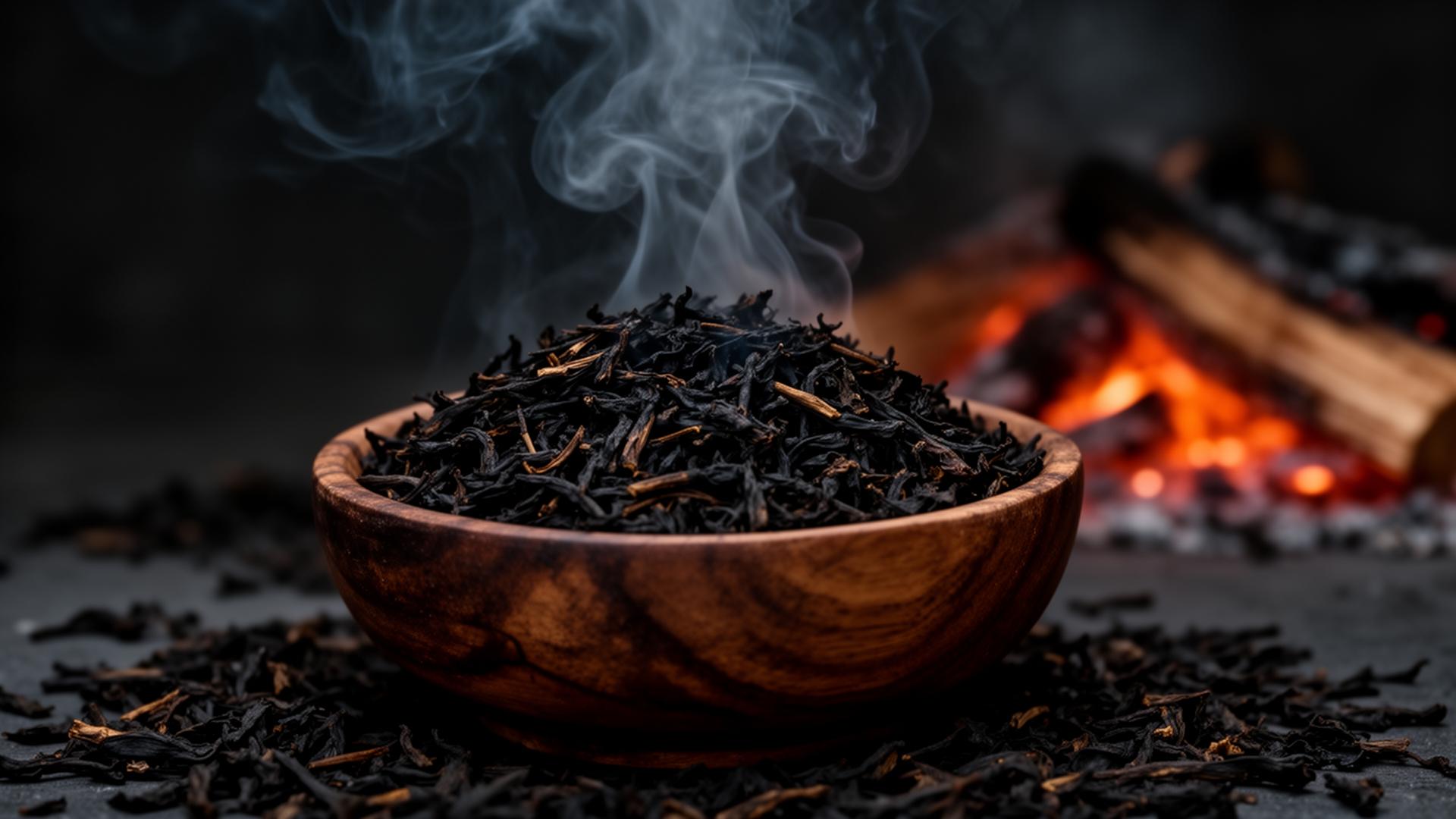
Lapsang Souchong is a fully oxidised black tea from the Wuyi Mountains of Fujian, China, made unmistakable by being naturally smoked over fresh pinewood fires during processing. It is the world's original smoked tea — the first deliberately smoke-dried black tea ever made — and the technique has barely changed in more than 350 years.
The name comes from two Fukienese words. "Lapsang" points to the smoking method (and the place — Lapu Mountain, near the original village). "Souchong" refers to the leaf grade: the slightly larger, more mature fourth-and-fifth leaves down the stem, picked in early May at peak harvest. Those mature leaves are what give the tea its weight and body underneath the smoke.
Where it comes from
Real Lapsang Souchong comes from one place: Xingcun village ("Star Village") in the Wuyi Mountains, a UNESCO-listed nature preserve in northern Fujian. The bushes sit at 3,500–5,000 feet on mineral-rich volcanic soil, in cool mist that hangs in the valleys most of the morning. The land does half the work — the producer does the other half.
Anything labelled "lapsang-style" or smoked tea from outside Fujian is a different drink. Same idea, different terroir, different result.
How it is made
The traditional process is slow and patient, and it is what separates real Lapsang Souchong from flavoured imitations:
- Hand-picking. Mature souchong-grade leaves are picked by hand in early May.
- Withering over pinewood. Leaves are spread on bamboo trays in a wooden shed, with fresh pinewood fires burning on the floor below. Smoke rises through the leaves for hours as they wither.
- Rolling and oxidation. Leaves are rolled to break the cell walls, then allowed to fully oxidise.
- Final smoke-dry. A second round of slow drying over pinewood embers sets the smoke deep in the leaf.
There are no added flavourings, no liquid smoke, no smoke essences. The flavour is earned over a long, smoke-filled afternoon.
What it tastes like
On the nose: pine resin, sweet bonfire, a whisper of bacon. On the palate: smooth malt, oak, a long dry finish. The smoke is loud, but the tea underneath is rounded and full-bodied with surprisingly low tannins. Brewed correctly, there is no bitterness at all.
For the full tasting note, see what does Lapsang Souchong taste like.
How to brew it
- 1 level teaspoon of loose leaf per 250 ml cup
- Freshly drawn, filtered water at 95–100°C — never reboiled
- Steep 3 minutes for clarity, 4–5 minutes for full campfire intensity
- Drink black, or add a small splash of milk to soften the smoke
The full method, plus tips for iced and milk versions, is in our brewing guide.
Caffeine and health
Lapsang Souchong is a black tea, so it contains caffeine — roughly 40–60 mg per 250 ml cup, less than coffee but enough for a steady lift. Like all true teas, it also contains L-theanine, which softens the caffeine spike and supports focus. More detail in our caffeine explainer.
Is it banned in the UK?
No. Lapsang Souchong is not banned in the UK. The rumour comes from EU PAH limit changes in the early 2020s that briefly affected some smoked products. Reputable producers test and stay well within limits — full context in our explainer.
What pairs with it
Smoked cheeses, BBQ brisket, dark chocolate, roast lamb, sourdough with cultured butter, cold mornings, long evenings. Anything that can stand up to wood smoke is fair game.