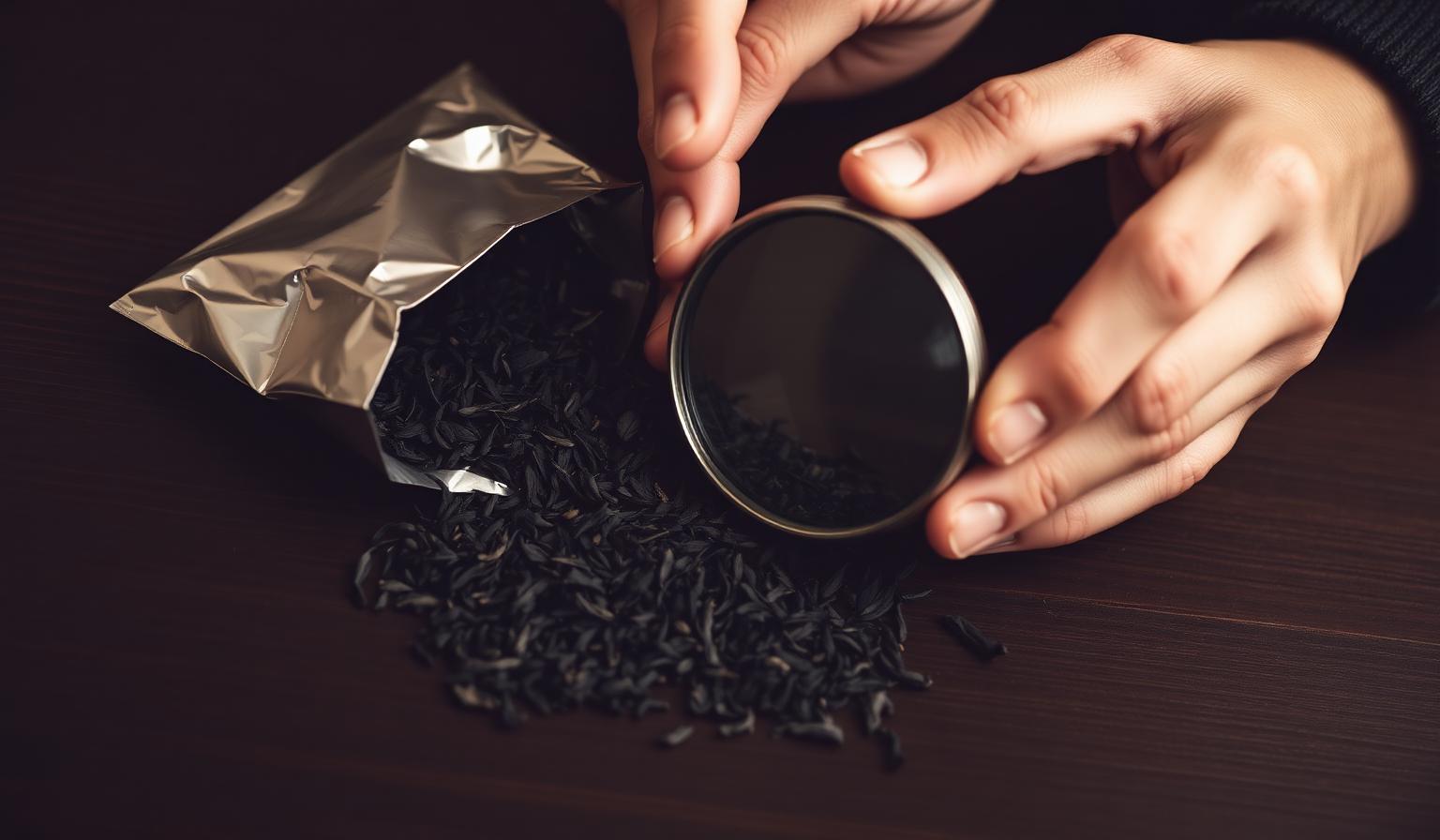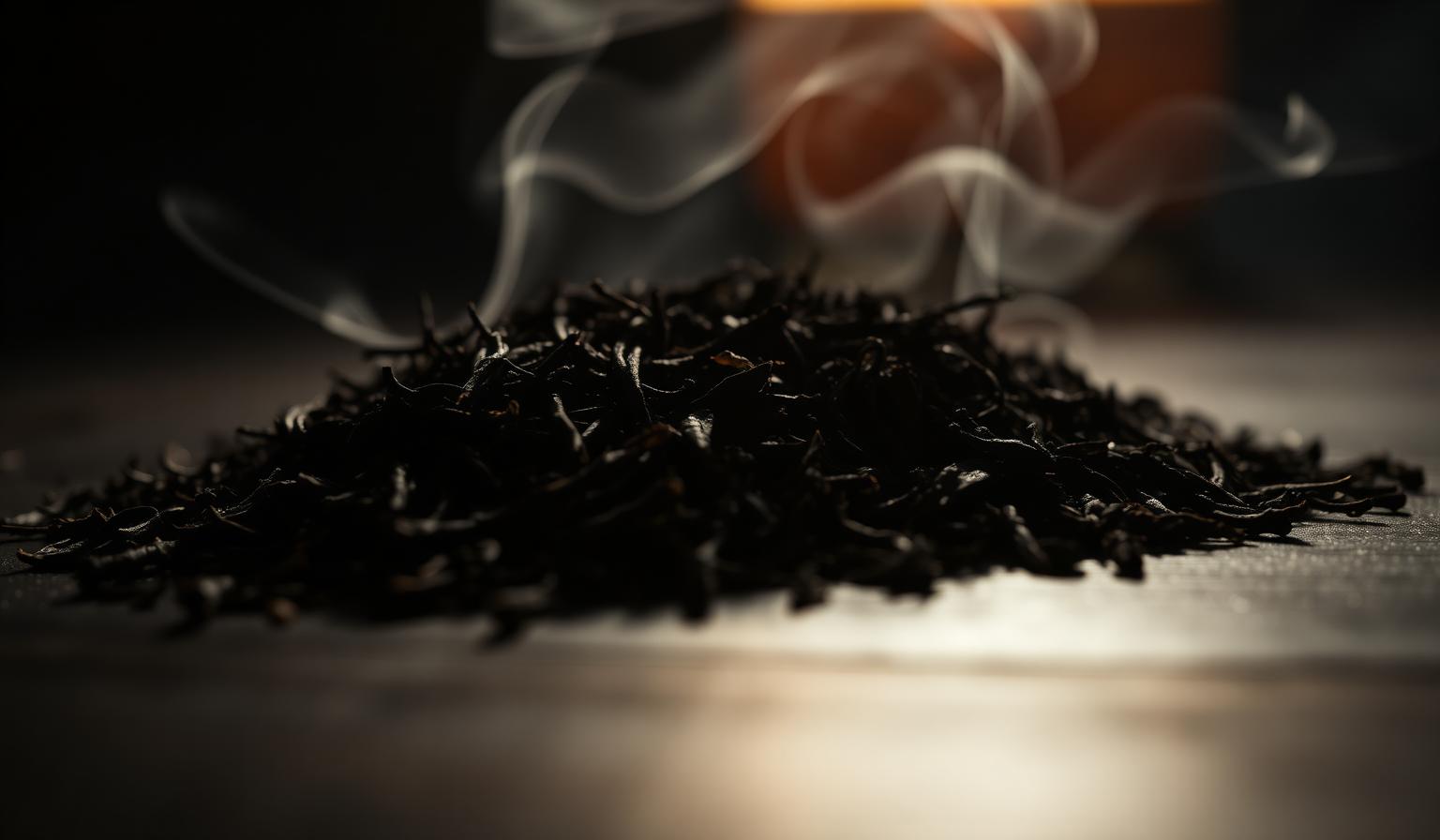
Lapsang Souchong is the most distinctive black tea in the world. Open the pouch and the first thing you meet is wood smoke — not a hint, not an essence, an actual campfire. People either fall for it on the first sip or politely hand the cup back. There is very little middle ground, and that is the point.
The first sip
On the nose: pine resin, sweet bonfire smoke, a faint whisper of bacon. On the palate: smooth malt, oak, and a long, dry finish that lingers. The smoke is loud, but the tea underneath is rounded and full-bodied, with surprisingly low tannins. Brewed correctly, there is no bitterness at all.
Why it tastes the way it does
Real Lapsang Souchong is naturally smoked over fresh pinewood fires in the Wuyi Mountains of Fujian, China. The leaves are withered on bamboo trays directly above the embers, picking up smoke as they oxidise. There are no added flavourings, no smoke essences — the flavour is earned over hours of slow drying in a smoke-filled wooden shed.
"Smells like a forest. Tastes like a campfire. Finishes like a deep breath outside."
What it pairs with
Lapsang Souchong was made for bold food. The smoke does not back down from anything on the table.
- Smoked cheeses — cheddar, gouda, scamorza
- BBQ brisket, ribs, pulled pork
- Dark chocolate, especially 70%+ with sea salt
- Roast lamb and venison
- Sourdough with cultured butter
- Cold, quiet mornings
If you are new to it
Start with three minutes of steep time, not five. Use one level teaspoon per cup. Drink the first cup black. If the smoke is too much, a small splash of milk softens it dramatically and brings the malt and oak forward. Most people who think they hate Lapsang Souchong have only ever had it oversteeped from a teabag — try it loose, fresh, and brewed properly. It is a different drink entirely.